Field Service Fleet Management: A Practical Guide to Running Technician Vans in the UK
Drafted with AI assistance, edited and fact-checked by Sean Flannery. See our editorial policy.
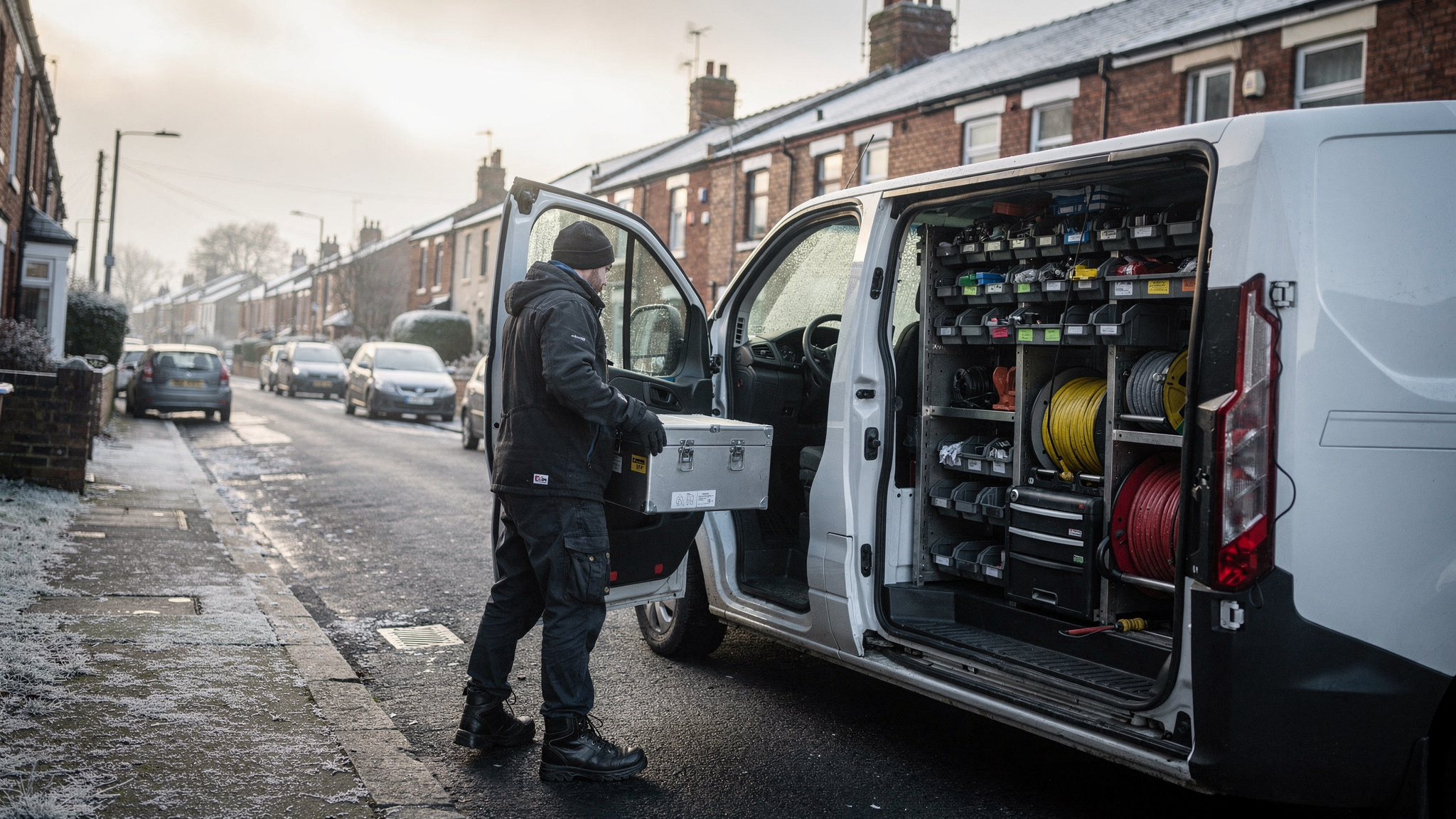
Field service fleet management is the day-to-day running of technician vans: scheduling jobs, planning routes on realistic travel times, keeping vehicles ready and giving customers live arrival times. For UK teams, that means planning around busy local 'A' roads, fuel prices and winter weather, with software such as Locate2u handling routing, tracking and dispatch.
Picture a Monday morning at a heating and plumbing firm with a dozen vans. There are two boiler repairs in south London, an install in a Surrey village, a landlord visit across town, and a customer who needs the engineer before the school run.
That day goes well when the plan is built on real travel times, current running costs and vans that are ready to go.
What field service fleet management covers for a UK van team
Vans make up a large and growing share of traffic on British roads. Department for Transport road traffic estimates show van traffic in Great Britain rose 1.3% in 2024 to 58.5 billion vehicle miles, and vans accounted for 17% of all motor vehicle traffic that year.
On roads that busy, a schedule built on map distance alone tends to underestimate the drive. Travel times need to come from real road speeds.
The trades base is large too. The Office for National Statistics counted 370,770 VAT and PAYE registered construction firms operating in Great Britain in Quarter 3 2024, a 1.7% increase compared with 2023.
In a market that size, customers generally have other firms they could call next time. Arriving when promised and keeping them informed gives them a reason to book the same team for the next call-out.
Day to day, field service fleet management covers four connected pieces of work.
Scheduling decides which technician takes which job, and when. Routing turns that schedule into a drive that fits real traffic.
Vehicle readiness makes sure the van, tools and parts are fit to go. Tracking and job records keep the office and the customer informed from first call to finished job.
A useful example comes from a trade supplier. Franz Building Supplies delivers heavy and bulky building materials to construction sites, builders and trade professionals, whose projects rely on timely, accurate deliveries.
The team wanted better visibility of daily operations and a reliable way to show that each delivery was completed correctly: what arrived, when and where.
Franz brought in Locate2u's proof of delivery, which captures photo evidence, signatures and timestamps for every delivery. The team also began sharing live tracking links, so customers could see when their order would arrive.
On its case study page, the business says: "What I love about Locate2u is the live-tracking features and proof of delivery. Our customer disputes dropped to nearly zero."
A technician's van carries a person and a toolkit rather than a load of blocks, but the customer's questions are the same. When will you get here, and what was done?
How to build technician schedules around real UK road speeds
A schedule is only as good as its travel times. The Department for Transport's travel time measures put the average speed on local 'A' roads in England at 23.0 mph in 2024, with an average delay of 48.3 seconds per vehicle per mile.
As a worked example, a 10-mile hop between jobs takes roughly 26 minutes at the England average of 23.0 mph.
That figure is an average. Dense town and city centres such as London can run slower, so technicians working there generally benefit from jobs clustered much closer together than a colleague covering county towns.
Here is a practical way to build schedules on those realities:
- Set travel speeds by area. Use a slower assumption for London and dense town centres, and a faster one for county and rural work.
- Cluster jobs by postcode area so each technician works a tight patch, with cross-town trips kept to a minimum.
- Give each job type a realistic duration, including time to park and carry tools along narrow residential streets.
- Start and finish near where each van is kept overnight, so the first and last drives are short.
- Hold back a slot or two for urgent call-outs rather than filling every hour.
Weekday morning and afternoon peaks can slow van travel. Where you can, keep long cross-town drives out of those hours.
Locate2u's dispatch planning builds optimised routes from job locations, time windows and driver availability. When an urgent job arrives mid-morning, dispatchers can slot it into a live route rather than rebuilding the whole day.
Planning routes that account for diesel prices and London's charging zone
Diesel is a cost a van fleet can track week by week. Government weekly road fuel price data put the average UK diesel pump price at 195.53p per litre in the week of 21 September 2026.
Because the figure is published every week, reviewing fuel budgets and job pricing monthly is straightforward. A call-out charge set in spring can drift away from autumn running costs.
Shorter, better-sequenced drives help keep that bill in check. There are more practical ideas in the guide to how fleet management software can boost fuel efficiency.
London adds another line to the cost sheet. Transport for London describes the Congestion Charge as a daily charge for driving within the zone from 7:00 to 18:00 Monday to Friday and 12:00 to 18:00 at weekends and on bank holidays.
Because it is a daily charge, grouping central London jobs onto the same days keeps charged days down. As a worked example, four zone jobs booked on one day mean one day's charge, while the same jobs spread across four days mean four.
Operators should check the current charge, whether the ULEZ charge also applies to each van, and any exemptions on the TfL website before building zone costs into quotes.
How a simple pre-dispatch vehicle check helps vans start the day ready
A job schedule assumes the van is ready. A short check before the first job gives the planner confidence in that assumption.
The most useful checks are quick, recorded and visible to the office:
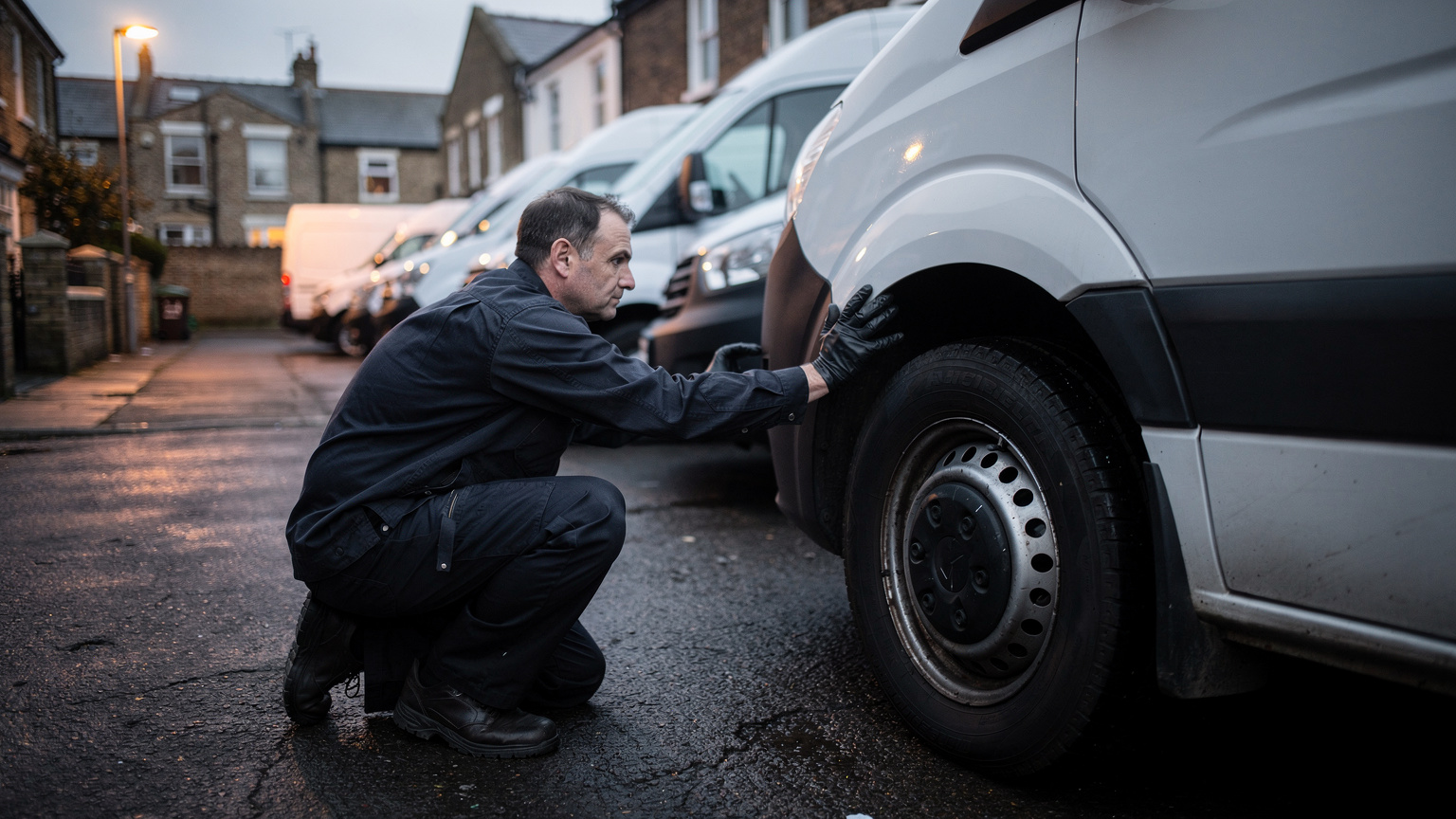
- A walkaround on the technician's phone before setting off: tyres, lights, mirrors, fluids and any warning lights.
- A photo and note for anything that needs attention, sent straight to whoever plans the day.
- Service and MOT due dates held against each van, so bookings avoid days it is at the garage.
- A quick look at stock and tools for the day's jobs, so the first visit starts with everything on board.
When a defect is reported early, the planner can swap vans or move jobs before any customer is affected. A potential late start becomes a calm reshuffle.
When checks, service dates and routes sit together in fleet management software, each vehicle builds up a clear history in one place. For what a check must cover, confirm the current requirements with the Driver and Vehicle Standards Agency.
Adding winter buffers so schedules hold up through frost and snow
UK winters can change a day's plan overnight. In early January 2026 the Met Office issued an amber snow warning and said: "There is also a risk of widespread ice, making travel hazardous."
For a service fleet, the answer is planning ahead. A few adjustments keep schedules realistic when warnings are issued.
Build a winter version of your travel assumptions, with slower speeds for rural lanes, hills and untreated side streets. Switch to it whenever a weather warning covers your area.
As a worked example, a technician with six jobs and five drives between them could have 15 minutes added to each drive on an ice warning day. That adds 75 minutes, so planning five visits instead of six may suit that day better.
Put the most important jobs first. If your team services heating systems, a cold snap can bring extra call-outs just as the roads slow down, so no-heat calls and vulnerable customers belong at the top of the list.
Move the first appointment a little later on icy mornings, giving technicians time to clear windscreens and set off steadily.
And keep customers updated. A live arrival time that moves with the conditions is far more reassuring than a fixed slot that quietly slips.
Locate2u lets dispatchers adjust routes during the day and reassign jobs to another vehicle. A technician held up on a gritted A road can hand the next visit to a colleague nearby.
How live tracking and clear job records build customer confidence
A customer waiting in for a technician wants a clear answer to one question: what time?
Locate2u's real-time tracking gives the office a live view of every van, and customers can receive a tracking link showing the technician's progress. They see the arrival time for themselves, without phoning the office to ask.
For dispatchers, the same view answers the questions that come up all day. Which technician is closest to an urgent call? Who is running ahead and could take an extra job?
Records matter just as much once the work is done. Proof of delivery in Locate2u captures photos, signatures and timestamps, and a service team can use the same tools to record completed visits.
A photo of the finished installation, a customer signature and timestamps on arrival and completion give everyone a shared account of the visit.
The office can answer follow-up questions quickly, and the customer has a record to keep. These are the same live tracking and proof of delivery features that transformed the customer experience for Franz Building Supplies, applied to a service visit instead of a delivery.
Technicians benefit too. With the photo and signature captured on site, the job is closed while it is fresh and there is less paperwork to finish at the end of the day.
What to weigh up when adding electric vans to a service fleet
Electric vans are a growing part of UK fleets. According to Department for Transport vehicle licensing statistics, over 22,000 zero emission light goods vehicles were registered for the first time in the UK in 2024, an increase of 3% compared with 2023.
That points to steady rather than sudden change. A route-by-route approach lets a service fleet move at the same measured pace, starting where an electric van fits most comfortably.
Start with daily mileage. Look at a few typical weeks of routes for each van. Short, dense urban rounds, like much city-centre work on local roads, are natural first candidates to test.
Then charging. Work out where each van will charge overnight, at the depot or at the technician's home, and how much time sits between the last job and the first.
Payload comes next. Technician vans carry tools, parts and stock, so check that the electric model's load space and payload suit the kit your team actually carries.
Finally, run a pilot van through a cold month before committing more of the fleet. Schedules and winter buffers then get tested in the conditions that matter.
A mixed fleet also needs planning that knows which van is which. Locate2u's routing takes vehicle types into account, so an electric van can take the shorter, denser rounds while diesel vans cover longer county trips.
A practical checklist for choosing field service fleet software
The clearest test of any platform is your own work. Ask for a demo built on a typical Monday and a busy Thursday from your job list, then compare the planned arrival times with what your technicians know those days are really like.
Use these questions during that demo:
| Question to ask | Why it helps a UK service fleet |
|---|---|
| Does routing use time windows, technician availability and realistic travel times? | Dense urban work and county work can run at different speeds, so one assumption rarely fits both. |
| Can a dispatcher add an urgent job to a live route? | Reactive call-outs can be fitted in without rebuilding the whole day. |
| Do customers receive a live tracking link? | Customers waiting at home can plan around a real arrival time. |
| Does the app capture photos, signatures and timestamps on site? | A clear record of each visit supports follow-up questions and invoicing. |
| Can vehicle checks and service dates sit alongside the schedule? | Planners can move jobs before a van issue reaches a customer. |
| Does planning handle mixed vehicle types, including electric vans? | Each van can be matched to the rounds it suits best. |
| Is pricing published and easy to follow? | Clear pricing makes it easier to budget as the team grows. |
Locate2u brings routing, live tracking, dispatch and proof of delivery together in one platform. Current plans are listed on the Locate2u pricing page.
Frequently asked questions
How much travel time should a schedule allow between a technician's jobs?
As a worked example on DfT's 2024 England average of 23.0 mph for local 'A' roads, a 10-mile gap between jobs takes about 26 minutes. Dense city centres such as London can run slower than that average, so London schedules generally need tighter job clusters and fewer cross-town hops.
What hours does the London Congestion Charge cover for service vans?
TfL's page describes a daily charge for driving within the zone from 7:00 to 18:00 Monday to Friday and 12:00 to 18:00 at weekends and on bank holidays. Check the current amount, whether the ULEZ charge also applies to each van, and any exemptions on tfl.gov.uk before building it into quotes.
How often should a van fleet review its fuel budget?
Government weekly data put the average UK diesel pump price at 195.53p per litre in the week of 21 September 2026, and the figure is published every week. Reviewing fuel budgets and job pricing monthly, rather than annually, keeps quotes closer to real running costs.
A technician day that runs on time starts with honest planning: travel times set by area, fuel and zone costs reviewed often, a quick vehicle check, winter buffers and a live arrival time for every customer. When you are ready to put that into practice, see how Locate2u's route optimisation builds each day around your jobs, your technicians and the roads they actually drive.