Food Delivery Management System: How Canadian Restaurants and Meal Kit Businesses Run Their Own Fleet
Drafted with AI assistance, edited and fact-checked by Sean Flannery. See our editorial policy.
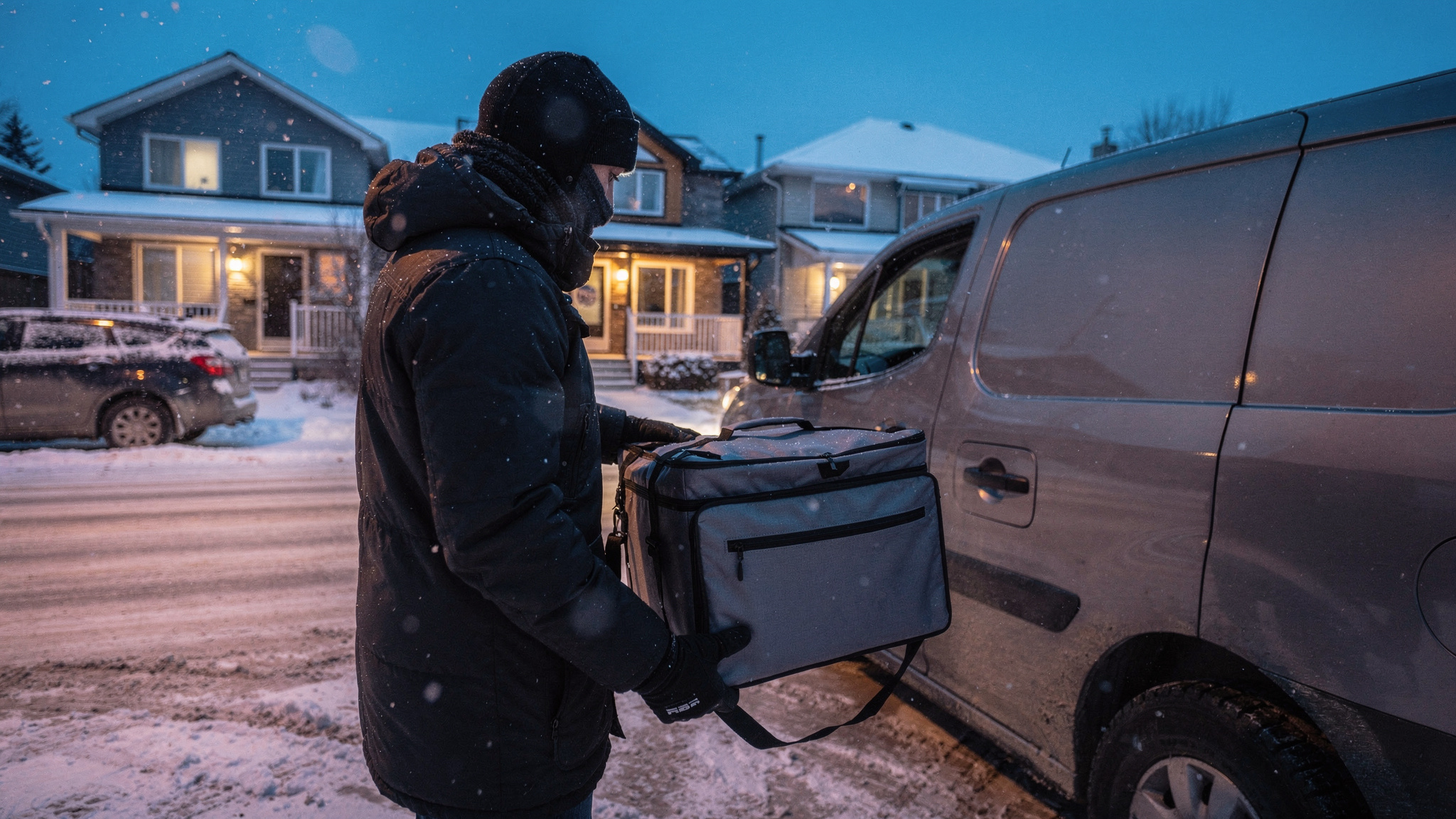
A food delivery management system is software that pulls orders from your online store, batches them into optimized driver routes, sends customers live tracking links and records proof of delivery. For Canadian restaurants and meal kit businesses running their own drivers, it replaces manual dispatch and gives one place to plan around winter travel times.
A Friday dinner service in Ottawa as snow starts to fall and a meal kit run leaving a Calgary kitchen before sunrise in January raise the same questions. Which orders travel together, which driver takes them, and when should each customer expect a knock at the door?
Answering them well, in English and in French where your customers need it, is the job a good system does.
A food delivery management system gives restaurants more control over the margin on every order they deliver
The Globe and Mail reported in May 2022 that third-party delivery app commissions can take up to 30 per cent of every restaurant order. Treat that as an upper bound reported at that date rather than a current rate. It still frames the first decision: which orders you want to deliver with your own team.
Fees still shape how Canadians order. A 2025 survey by Dalhousie University's Agri-Food Analytics Lab found that ordering through delivery apps more than once a month is a regular habit for many Canadians, while among people who had stopped using the apps or never used them, cost was the main reason, with platform fees named close behind food prices.
Delivery apps can help restaurants reach new customers, and many operators keep using them. Orders placed on your own website or by phone can go out with your own drivers instead, carry no marketplace commission and give fee-conscious customers a direct way to order.
That margin is worth looking after. Statistics Canada figures released in March 2026 put the operating profit margin for food services and drinking places at 4.1% in 2024, up from 3.6% in 2023. At that level, the cost of each delivery run matters, and so does being able to see it.
A food delivery management system brings direct orders into one dispatch view and turns them into planned routes. It also keeps a timestamped record of every stop, so you can see how many orders each run carried and when each one arrived.
For a restaurant, that turns delivery from something that happens after the kitchen closes a ticket into something you can plan and improve.
More orders in each run means a lower delivery cost per order, so batching by window comes first
McKinsey & Company partners set out the logic in a March 2022 discussion of food delivery: the more orders picked up together and delivered in the same run, the lower the cost of delivery per order. It is a global point, and it applies just as directly to a kitchen in Halifax or Kelowna.
Here is a worked example on assumed figures, not sourced data. Say a delivery run costs $30 CAD to drive. Carrying 3 orders, each order bears $10 CAD of that run. Carrying 6 orders on the same run, each bears $5 CAD.
On a subsector operating margin of 4.1%, halving the delivery cost each order carries is the kind of difference a team can see in its results. Swap in your own run cost and order counts to reuse the example.
Delivery windows are what make batching possible. When customers choose a window at checkout, orders arrive already sorted into groups that can travel together.
Meal kit businesses usually deliver on fixed days, so the whole run can be planned the evening before. Restaurants tend to work with shorter windows through a service, grouping whatever is ready for the same neighbourhood.
Madam Seafood, a family-run seafood business in Adelaide whose story appears later in this article, builds its runs exactly this way, from windows customers choose at checkout.
Once orders are grouped, route optimization sequences the stops in each batch so every route follows an efficient order of stops across town.
Automated dispatch gives planning time back on food services' second-largest cost line
In 2024, salaries, wages, commissions and benefits made up 33.6% of operating expenses for Canadian food services, second only to cost of goods sold, according to Statistics Canada figures released in March 2026.
Time spent sorting addresses and building routes by hand sits inside that same line. When dispatch is automated, the hours that went into planning can go back into cooking, packing and looking after customers.
Dispatch planning in Locate2u assigns each batch to an available driver and sends a sequenced list of stops to the driver app.
For restaurants, the most useful part happens mid-service. New orders can be slotted into routes already on the road, so a late order for a street on tonight's run joins that route instead of needing a trip of its own.
Meal kit teams get their value the night before. The whole delivery day can be planned in one pass, checked, and released to drivers in the morning, with the dispatcher overseeing routes instead of building them and bringing what they know about the kitchen and the neighbourhoods to the review.
Most Canadians live in less remote municipalities, so urban delivery zones can be planned tightly while regional runs get their own schedule
Statistics Canada's 2021 Census analysis, published in February 2022, found that most Canadians (88.0%) live in municipalities classified as the least remote or less remote. The same release put the share of Canadians living in rural areas at 17.8% in 2021.
For a food business serving a city, that points to a practical split. Most customers will generally sit in compact urban zones, with a smaller group further out.
Urban zones reward tight planning. A small radius around the kitchen, several windows through the day and live slotting of new orders suit busy neighbourhoods from Vancouver to Quebec City.
Regional customers are better served by a schedule of their own. A run to towns along the St. Lawrence, or out past the edge of Edmonton, can go on set days with ETAs that allow for more kilometres between stops.
Keeping the two apart stops a long regional leg from pushing back the urban windows that follow it.
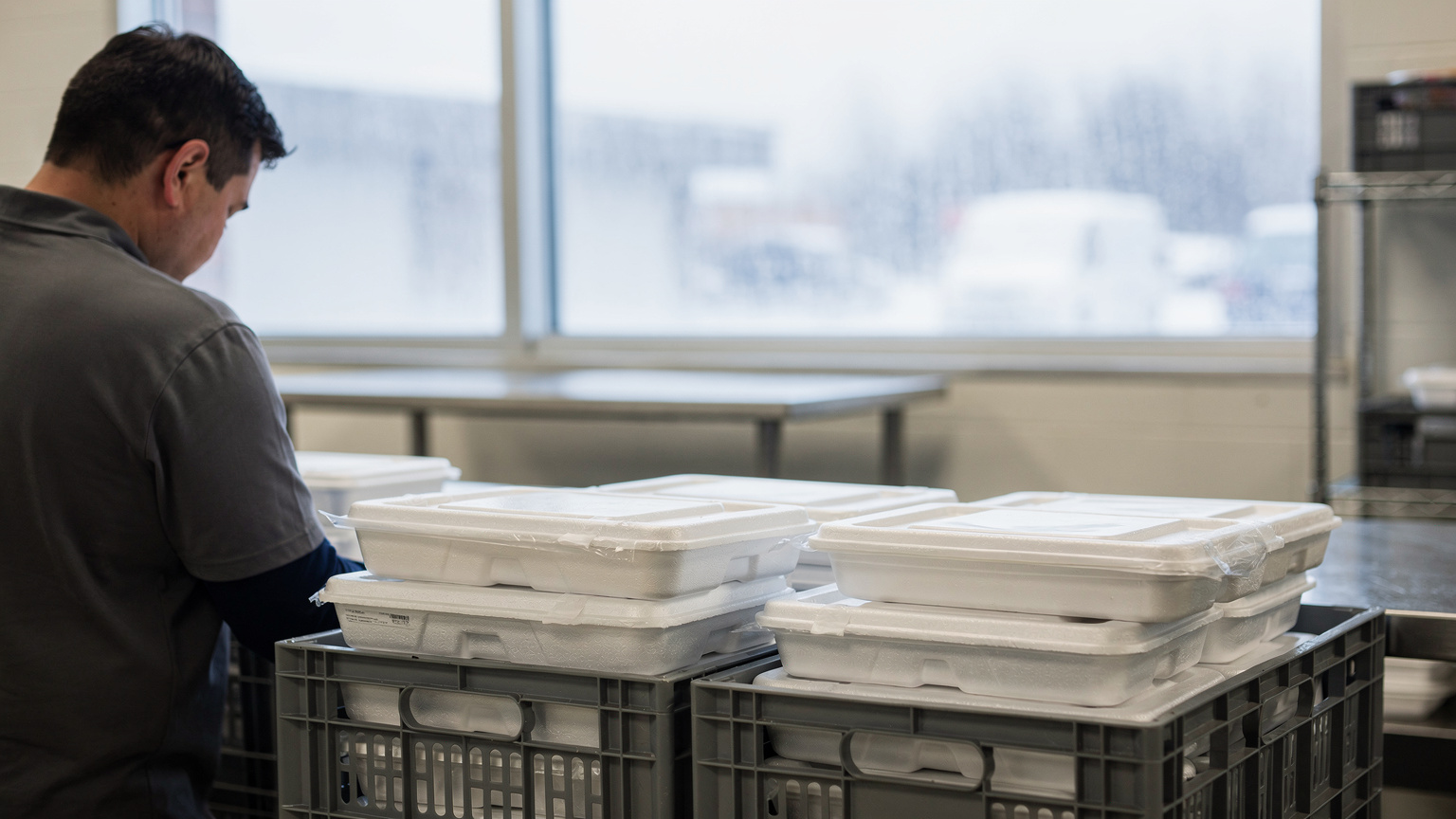
Winter-aware ETAs help drivers stay confident and keep customers informed when temperatures drop
Transport Canada notes that at temperatures below 7°C, all-season and summer tires begin to lose elasticity, leading to less traction, while winter tires keep their grip.
For a delivery fleet, that gives a clear planning cue. When overnight lows in your area start falling below that mark, it is time to confirm every delivery vehicle is on winter tires.
Where winter tire rules apply to your vehicles, check the current requirements with your provincial ministry of transportation.
For bad winter weather, Transport Canada's winter driving advice is to slow down and allow extra travel time. A good route plan does the same.
On snowy days, that means building a buffer into ETAs and giving each stop a little more time for snowy walkways and front steps. Drivers then work to a schedule that matches the conditions, so they can drive calmly and arrive with confidence.
Customers benefit as well. With real-time tracking, the link a customer receives shows where the driver actually is, so someone in Winnipeg waiting on a chilled order can watch it approach.
The first cold snap of the season is a good moment to review. Use the timestamps from recent winter runs to compare planned and actual arrival times, then adjust the buffer until routes finish on time.
How a family-run fresh seafood business automated most of its delivery workload
Madam Seafood was established in 2017 by a group of food-loving mothers in Adelaide, South Australia. It began as casual runs bringing fresh seafood home for friends and grew into a full-scale delivery operation.
Today it delivers fresh and live seafood, including prawns, oysters, crabs and sashimi-grade products, to homes across Adelaide. Weekly home delivery runs go out on Tuesdays and Fridays, alongside multiple pick-up depots around the city.
In the early years, bookings were handled by hand. Routes were often worked out after a long day on the fish farm, sometimes into the early hours, and every new order added more addresses to sort.
Customers also phoned to ask when their delivery would arrive, which makes sense for fresh seafood: someone needs to be home to receive it.
Madam Seafood connected Locate2u directly to its online store. When a customer picks a delivery date and time at checkout, Locate2u pulls in the order, groups it by delivery window, builds optimized routes for each driver run and sends the customer a real-time tracking link.
Its case study page describes how the business automated 90% of its delivery workload. Customers can now see when their seafood is on the way without picking up the phone.
The same set-up fits a Canadian meal kit business in Montreal or Calgary delivering perishable boxes on two fixed days a week: windows chosen at checkout feed straight into routes, with a winter buffer added on top. Madam Seafood's result is one business's experience, so treat it as anecdotal rather than a forecast.
Live tracking and proof of delivery help fresh and chilled food arrive at its best
Chilled food keeps its quality best when it is delivered within a tight window and handed to someone who is home to receive it.
Live tracking helps with both. A customer who can see the driver approaching is ready at the door, so the handover is quick and the order goes straight into the fridge.
Automated customer notifications keep recipients informed about their delivery status before the driver arrives, which gives busy households time to plan around the drop-off.
Proof of delivery completes the picture. Drivers capture a photo or signature in the app, and each stop is recorded with a timestamp and location.
That record is useful well beyond the doorstep. It confirms a contactless drop-off was placed where the customer asked, shows which windows run smoothly, and gives the whole team one shared record of each delivery.
For contactless drops, set the photo requirement so each image shows the order together with the door, porch or landmark the customer named. The record then answers the customer's question on its own.
For chilled orders, set window lengths and any winter buffer so the planned time in the vehicle stays within how long your packaging holds its temperature.
What to check before choosing a food delivery management system in Canada
The checks below follow from everything above: tight margins, delivery windows, Canadian winters and customers who may prefer messages in French.
Run each check on your own orders and your own delivery area rather than a sample dataset.
| What to check | Why it matters |
|---|---|
| Orders from your website and phone line land in one dispatch view | Direct orders carry no marketplace commission, so they should be the simplest to deliver |
| Customers can choose a delivery window at checkout | Orders arrive already grouped, which is what makes batching possible |
| New orders can join routes already on the road | Restaurants generally take orders throughout a service, not only in advance |
| Stop times and ETAs can be adjusted for winter days | Transport Canada advises allowing extra travel time in bad winter weather |
| Test whether tracking and notification messages can be edited in English and French | Where you serve francophone customers, they can receive updates in their language |
| Proof of delivery captures photos, signatures and timestamps | Every chilled or contactless drop-off has a clear record |
| Regional runs can be scheduled separately from urban zones | Longer regional legs generally stay on their own days, keeping city windows on time |
Pricing is the final check. Locate2u's plans are listed on the Canadian pricing page, so you can match a plan to the size of your delivery team.
If regional runs mean long days behind the wheel, check the current hours-of-service requirements with your provincial ministry of transportation before setting schedules.
And set a clear goal for the first month: routes that finish on time, week after week, before you add the next zone.
Frequently asked questions
Can a food delivery management system run alongside third-party delivery apps?
Yes. Many operators keep marketplace orders on the app while routing orders from their own website or phone line with their own drivers, and Locate2u's API integrations can bring orders from other systems into the same dispatch view.
Do meal kit businesses need different features from restaurants?
Generally, yes. Meal kit businesses deliver on set days with windows chosen at checkout, so planning the full run in advance matters most, while restaurants need to slot new orders into routes already on the road.
Should delivery notifications be available in French for Canadian customers?
Where you serve francophone customers, such as in Quebec or New Brunswick, check that tracking messages and notification templates can be edited in both official languages, and send yourself a test message in each before rollout.
How should a small restaurant start with its own delivery fleet?
Start with one delivery zone and one or two fixed windows, run it for a few weeks to learn real travel times, then add zones and drivers once routes and ETAs are consistently finishing on time.
A food delivery management system works best when it fits how your kitchen already runs: windows your customers choose, routes that suit a Canadian winter and a clear record of every handover. To see orders, routes, tracking and proof of delivery working together in one place, explore Locate2u's delivery management platform and plan your first zone around it.